New NMRA Achievement Program Certificate Recognizes Modular Railroading
The NMRA Achievement Program has a brand-new certificate—and this one recognizes a part of the hobby that many model railroaders have enjoyed for decades: modular railroading.
The Modular Railroading Achievement Program Certificate was approved by the NMRA Board of Directors on July 27, 2026, making it the newest certificate available through the NMRA Achievement Program. The new certificate recognizes modelers who demonstrate their skills in designing, constructing, operating, transporting, and publicly exhibiting model railroad modules.
For members involved with T-TRAK, NTRAK, Free-mo, Free-moN, NMRA-standard modules, and other modular organizations, the new certificate provides an opportunity to receive Achievement Program recognition for work they may already be doing.
What Makes Modular Railroading Different?
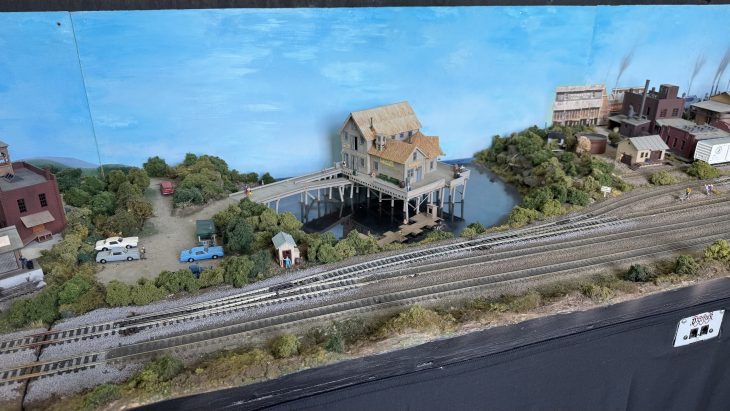
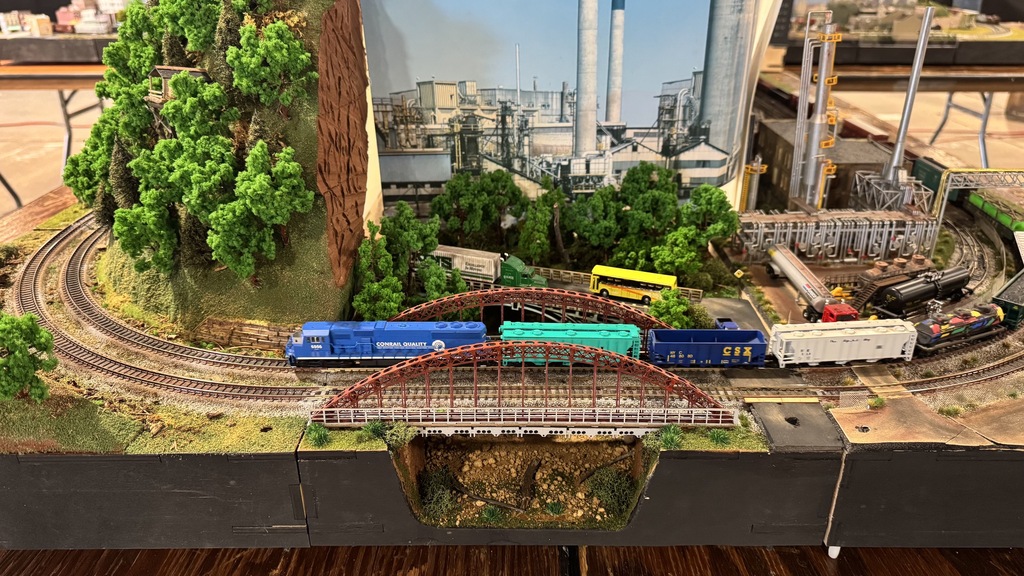
A module is more than simply a small section of a model railroad. It must be constructed according to an established standard so that it can connect mechanically and electrically with modules constructed by other modelers.
That interoperability is one of the defining characteristics of modular railroading. A module built by one person should be capable of being transported to a show or other event, connected to modules belonging to other modelers, and operated reliably as part of a much larger railroad.
Because of this, modular modelers need to combine many different skills. They must understand benchwork, trackwork, electrical systems, scenery, structures, operations, standards, transportation, setup, and reliability.
The new Modular Railroading certificate is intended to recognize this combination of skills rather than evaluating only one particular aspect of a module. The NMRA describes the certificate as recognizing the “holistic execution” of a modular system suitable for repeated public operation.
What Do You Need to Build?
To qualify, an NMRA member must construct and complete at least three operable modules that conform to an established modular standard. Examples specifically identified by the NMRA include NMRA standards, T-TRAK, NTRAK, Free-mo, and Free-moN, although other established modular standards may also qualify.
There is also a minimum combined module area based upon scale:
| Scale | Minimum Combined Area |
|---|---|
| O | 44 sq. ft. |
| S | 32 sq. ft. |
| HO | 24 sq. ft. |
| N | 12 sq. ft. |
| Z | 9 sq. ft. |
| T | 5 sq. ft |
Other scales use a proportional calculation based upon the 24-square-foot HO requirement.
An important point is that these numbers represent the combined area of the modules, not the required size of each individual module. For example, an N-scale modeler needs at least three modules totaling 12 square feet—not three modules of 12 square feet each.
More Than Just Building Modules
Simply constructing three modules isn’t enough.
Each module must have standards-compliant physical and electrical interfaces, operational trackwork, reliable mechanical and electrical performance, and completed scenery. A backdrop must also be included when appropriate for the modular standard being used.
The modules must then do what modules were designed to do—go places and operate with other modules.
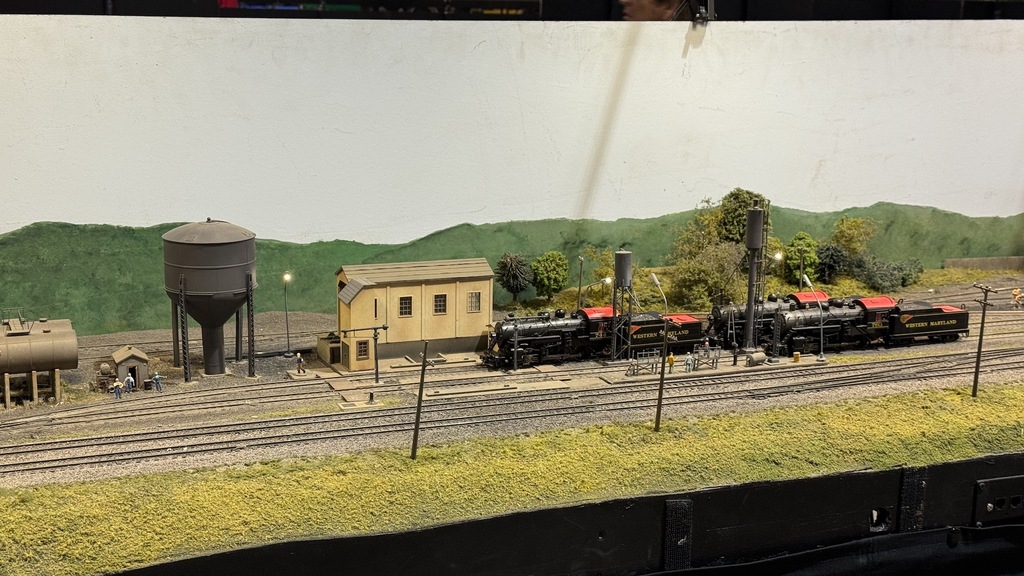
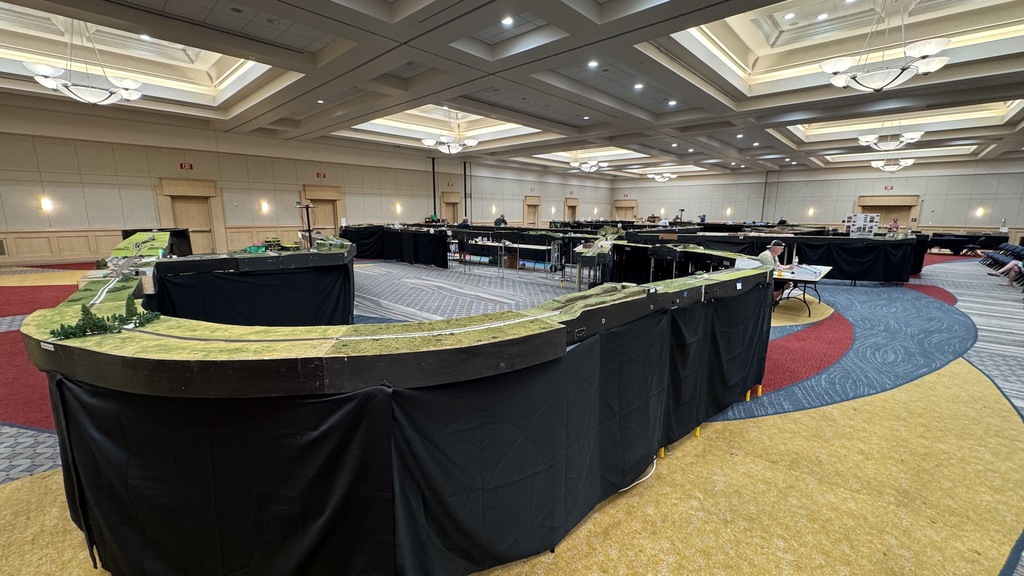
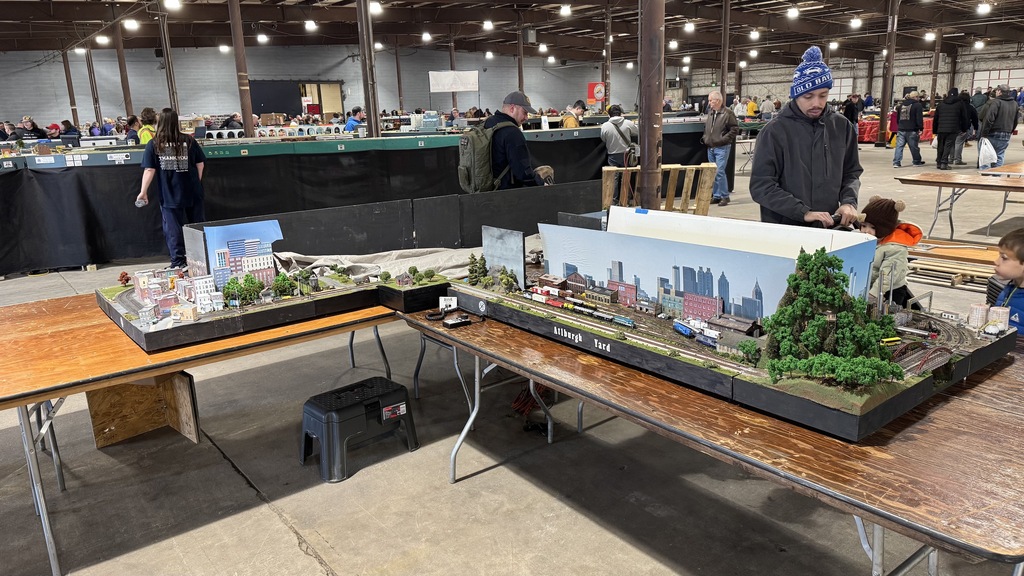
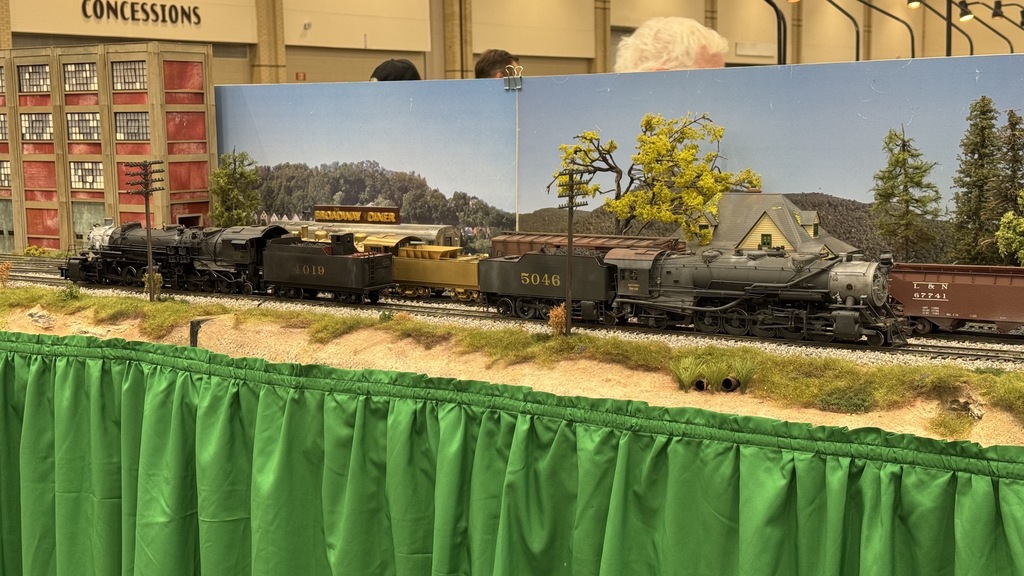
The qualifying modules must be successfully displayed and operated at a minimum of three separate public exhibitions or NMRA-sanctioned events. This requirement helps distinguish the Modular Railroading certificate from several of the other AP certificates. The finished work isn’t evaluated only on the workbench or in the modeler’s home; it must demonstrate that it can withstand transportation, repeated setup and teardown, connection to other modules, and actual operation in a public environment.
That reliability is a major part of successful modular railroading. Anyone who has participated in a modular setup knows that a module that works perfectly at home still needs to work after being loaded into a vehicle, transported to an event, unloaded, leveled, connected to neighboring modules, wired into the layout, and operated for hours—or even days.
Merit Award Evaluations
The new certificate also includes a Merit Award component.
Each module submitted toward the certificate must earn at least 87.5 points out of a possible 125 using the Modular AP Merit Scoring Matrix. The evaluation looks at the module as a complete piece of work rather than concentrating on a single modeling discipline.
The 125 available points are divided among six areas:
- Module Construction – 25 points: framing, rigidity, joinery, durability, surface preparation, and workmanship.
- Trackwork, Standards Compliance & Operation – 30 points: alignment, geometry, turnout performance, interfaces, smooth operation, standards compliance, and reliability.
- Electrical Systems & Control – 20 points: wiring, power distribution, connectors, strain relief, lighting, controls, sensors, sound, and other electrical features.
- Scenery, Terrain & Scene Integration – 20 points: terrain, landforms, ballast, vegetation, scenic textures, and treatment of module edges and seams.
- Structures, Details & Animation – 20 points: structures, bridges, roads, vehicles, details, visual storytelling, and mechanical or electronic animation.
- Presentation, Documentation & Public Readiness – 10 points: overall appearance, documentation, educational information where appropriate, and evidence of successful public operation.
The scoring system reflects one of the most interesting aspects of the new certificate. A successful module requires modelers to bring together skills that appear across several traditional Achievement Program categories.
What About Scenery AP Credit?
There is some potential overlap with the Master Builder – Scenery certificate, but earning the Modular Railroading certificate does not automatically qualify someone for the Scenery certificate.
Scenery constructed on qualifying modules may count toward the square-footage requirements for Master Builder – Scenery, but only when that scenery is separately evaluated according to the Scenery AP Merit Award standards. All of the other requirements for the Scenery certificate must still be completed.
For modular modelers interested in pursuing multiple AP certificates, however, this provides an opportunity to plan projects so that some of their work can contribute toward more than one Achievement Program goal.
Don’t Forget the Documentation
As with other Achievement Program certificates, documentation is an important part of the process.
Applicants must submit a Statement of Qualifications along with supporting information that includes a description of the design intent, construction methods, and operational purpose of the modules. They must also provide a copy of the modular standard used, wiring diagrams, at least five color photographs of each module, verification of the required public exhibitions, and evaluation forms signed by three qualified AP evaluators.
Keeping records and taking photographs while constructing your modules can make this process considerably easier than trying to reconstruct everything after the modules are finished.
A Welcome Addition to the Achievement Program
The Modular Railroading certificate recognizes an important aspect of today’s model railroad hobby.
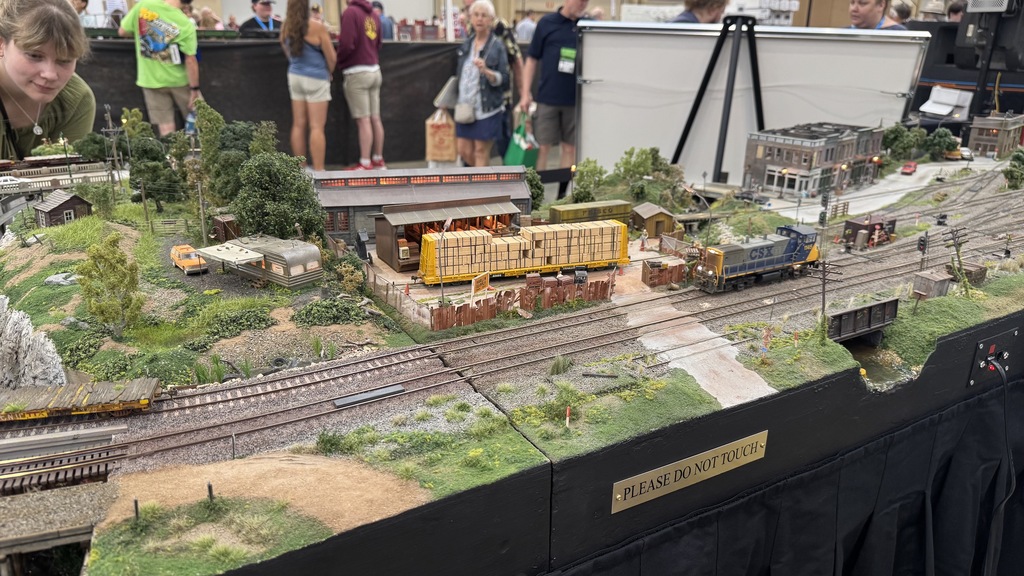
Modular layouts frequently provide some of the NMRA’s most visible interaction with the public. They appear at train shows, conventions, museums, community events, and other gatherings where visitors can see model railroading in action. They also provide an excellent way for modelers who may not have room for a permanent home layout to build scenery, operate trains, develop modeling skills, and participate in a larger railroad.
Perhaps most importantly, modular railroading is inherently social. Individual modelers build their own sections, but those modules become part of something much larger when everyone gets together.
The new certificate recognizes the craftsmanship required to build an attractive module, but it also recognizes something equally important: the ability to build a module that works reliably as part of a larger railroad.
If you already participate in a modular group, you may discover that you are well on your way toward completing many of the requirements. If you’ve been thinking about trying modular railroading, the new Achievement Program certificate provides one more reason to give it a try.
The complete requirements, current FAQ, evaluation information, and forms can be found on the NMRA Modular Railroading Achievement Program page.
For additional information about the Achievement Program, members can also contact their Division or Region Achievement Program Manager. The NMRA notes that the Modular Railroading requirements and FAQ are still being refined as questions are received, so anyone actively pursuing the certificate should check the official page for the latest information.
One thought on “New NMRA Achievement Program Certificate Recognizes Modular Railroading”
O 44 sq. ft.
S 32 sq. ft.
HO 24 sq. ft.
N 12 sq. ft.
Z 9 sq. ft.
T 5 sq. ft
These relationships do not seem right !
HO scale is 2x the size of N scale and requires 4x the area.
If an N-scaler needs to provide 12 sqft of layout area, then an HO-scaler should need to provide 48 sqft.
Or, the other way around, if 24 sqft are enough for HO scale, then 6 sqft should do for N-scale.
The smaller scales are clearly at a disadvantage.
And what about G-scale modules ? Are they considered at all ?
Comments are closed.